Train like an athlete. For life.
Strength, power and recovery for former athletes and lifters over 35 who want to keep playing, lifting and running for decades. Sessions that fit your time and how you feel each day. Full body or upper/lower, 2 to 5 days a week.
Coming soon to iPhone
You used to train for a season. Now you're training for the next 30 years.
Readiness
Your training, matched to how you feel today.
Most programs assume every day is a good day. Peak checks in first.
- 1
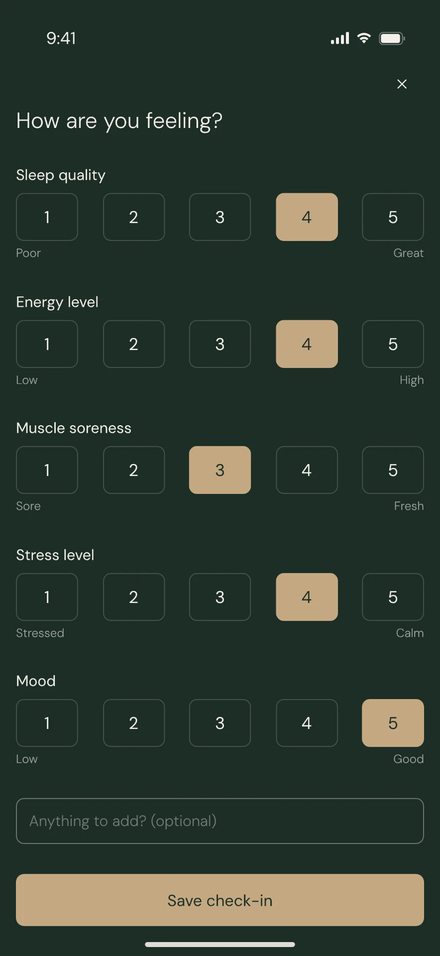
Check in
Five quick taps on sleep, energy, soreness, stress and mood. About 30 seconds.
- 2
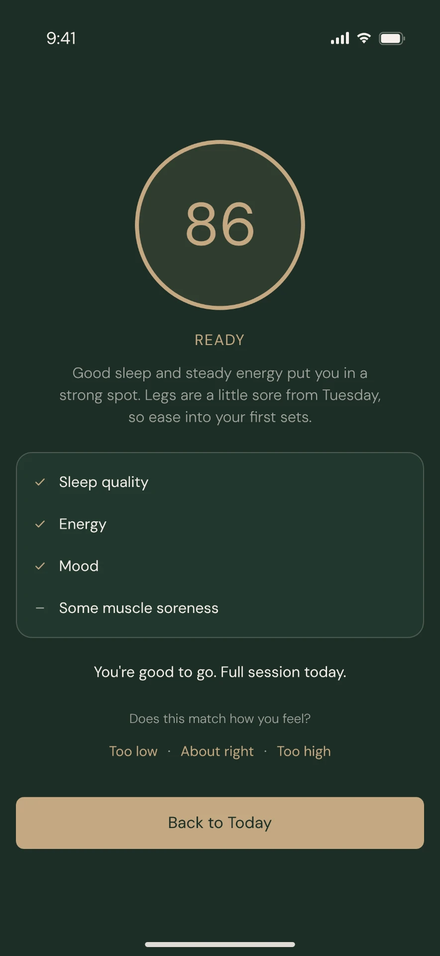
Get your score
A readiness score from 0 to 100 with a plain explanation of what it means for today. It stays on your Today screen all day.
- 3
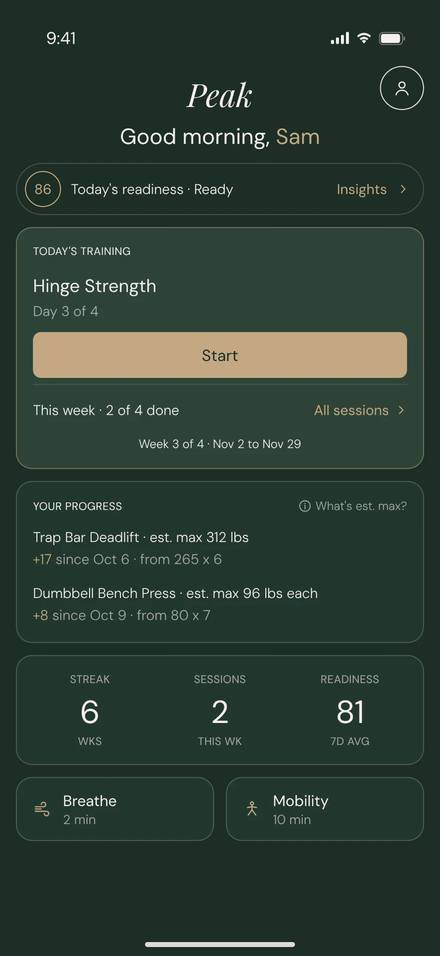
Your session adjusts
On a low day, Peak trims accessory sets first and protects your main lift. On a moderate day it keeps reps at the low end of the range. On a good day, you train as planned.


Peak asks now and then whether your score felt right, and uses your answers to tune it.
Short on time? Keep the work that matters.
Pick 30 to 75 minutes and Peak trims extras first, never your main lifts. Traveling or at another gym? Pick what's there and that day's session is rebuilt around it.

Progress without the wear and tear.
Training blocks with easier weeks planned in, and weights suggested from what you've actually lifted, so you keep moving forward without grinding yourself down.

Recovery is part of the plan.
Guided mobility with video, matched to what you trained, and two-minute breathing sessions. Everything can save to Apple Health.

Program
Your program, your way
Full body or upper/lower
Full body from 2 to 5 days a week, or upper/lower at 4 or 5.
30 to 75 minute sessions
Pick your usual length. On busy days, pick a shorter one and the main lifts stay.
Your goal shapes the plan
Longevity, Strength, Build muscle or Endurance. Each one changes your loads, reps and weekly sets.
Strength and power, the way athletes train
Heavy main lifts, jumps, throws and carries every week. Lift alongside running, riding or your sport with the Endurance goal.
How it works
- 1
Tell Peak your goal, the days you can train, how long you have and your equipment.
- 2
Get a training block built around your week. Join mid-week and you'll get a few ease-in days before your block starts Monday.
- 3
Train, check in, and Peak adjusts as you go.
The science
Built on the research
Peak's program was built with our cofounder, a director of performance and rehabilitation with more than a decade coaching professional and Division I athletes. He holds a master's in sports injuries and return to performance and is a certified strength and conditioning specialist (CSCS), and he contributes to published sports science research. Every part of the program was checked against the strength research. Where the evidence is clear, Peak follows it. Where it isn't, we chose what's safest for lifters who want to keep training for decades.
Power every week
Muscle power fades faster with age than strength, and it's tied to everyday function. Peak trains it in every program.
Hard, not to failure
Main lifts stop one to three reps short of failure. Strength comes from heavy, quality sets, not grinding.
Two days is a real program
Most of the strength gain comes from a few hard sets per movement each week. More days add variety and muscle, not necessity.
Planned easier weeks
A lighter week after every two training blocks, plus an easier session on low readiness days.
Peak is training guidance, not medical advice. Check with your doctor before starting a new program.
Who it's for
- You played sports or trained hard for years, and you still want to move like it.
- You're done with workouts that leave you beat up for days.
- You want to keep playing your sport, lifting heavy, running and jumping for the next 30+ years, without getting hurt.
- You have less time than you used to, and a life outside the gym.
Train for life.
Coming soon to iPhoneQuestions? hello@peaktraining.app